
Service notebook of Harold Gordon Cornell - 1917 - Part 11
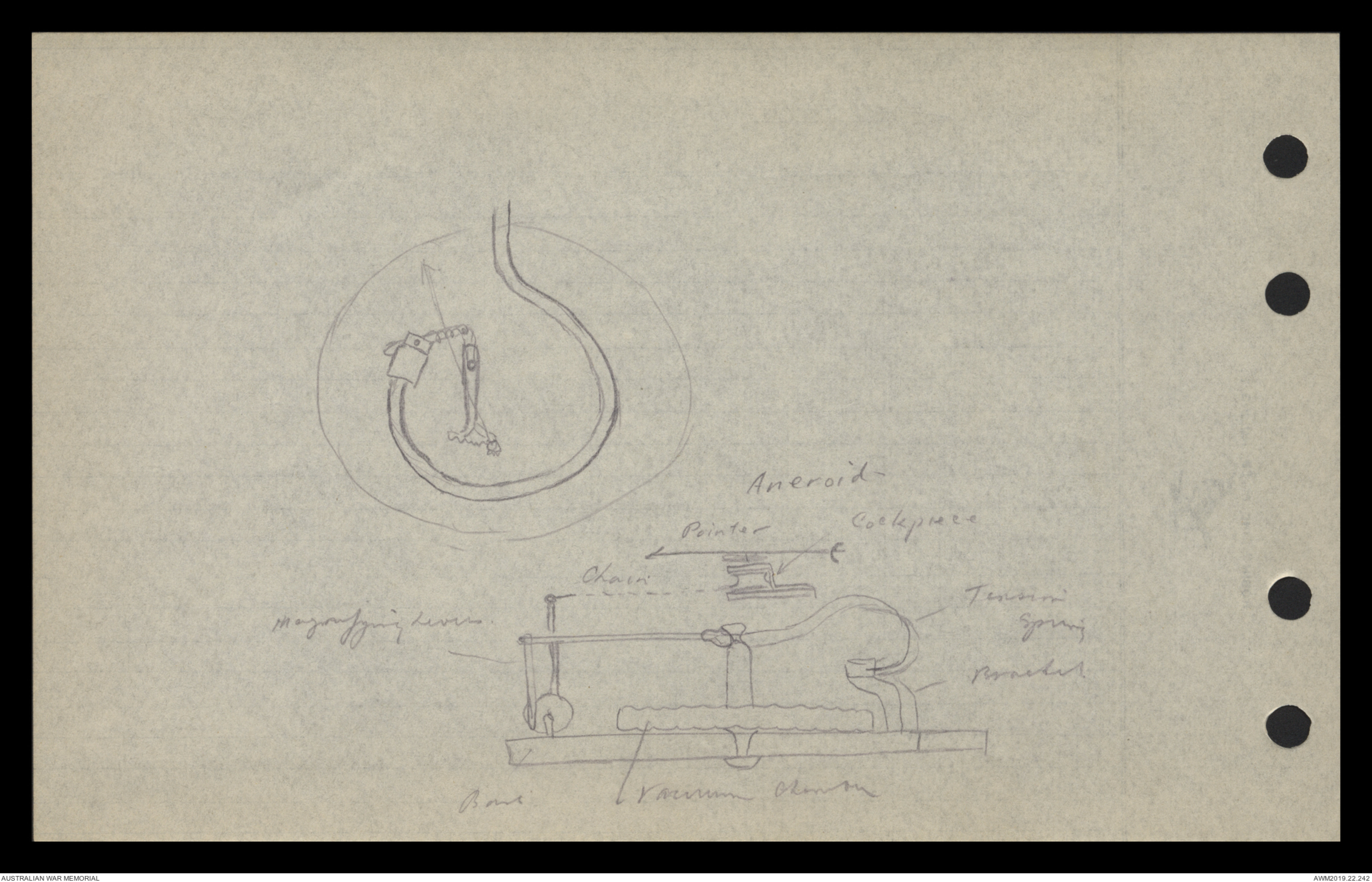
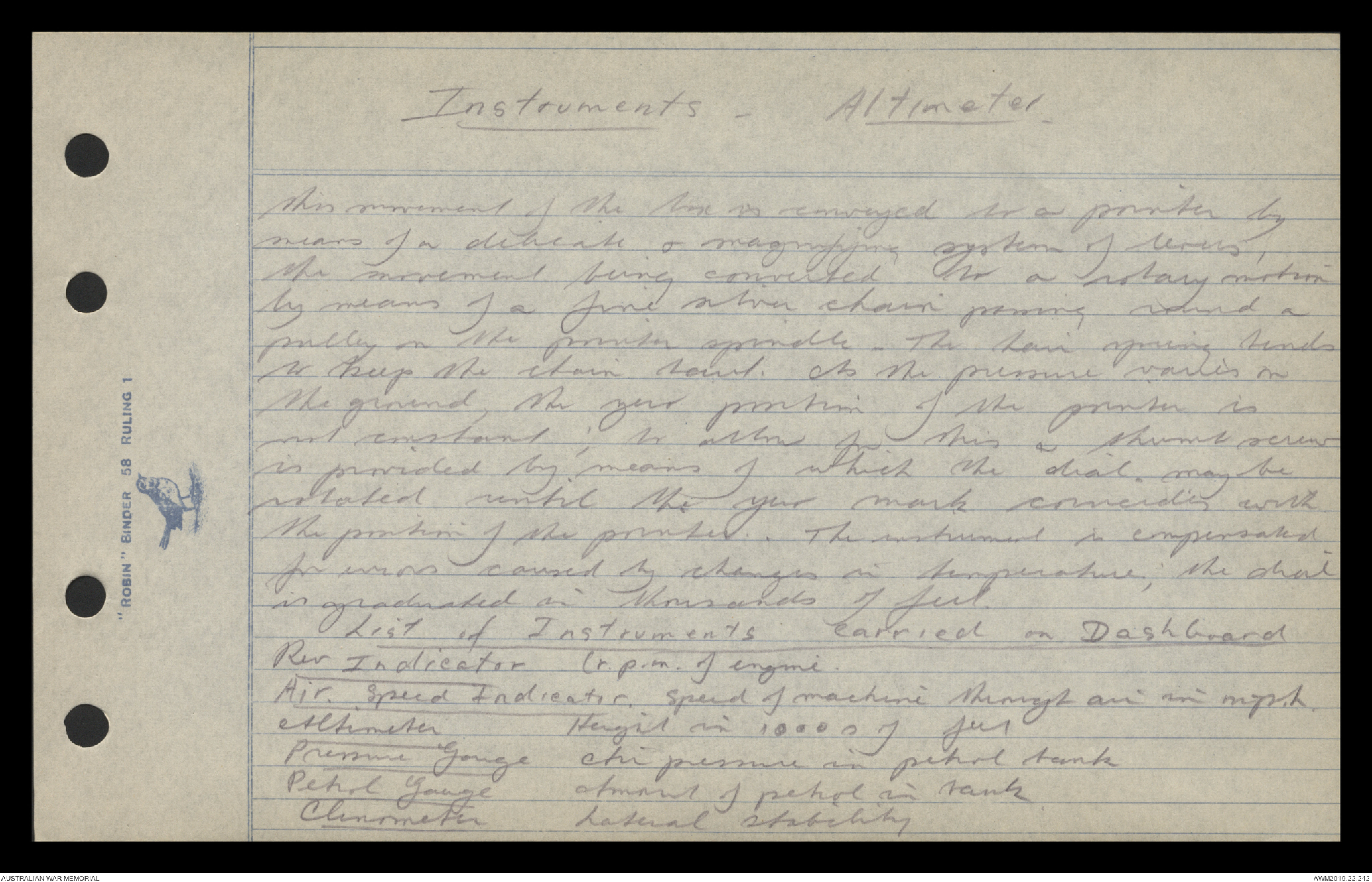
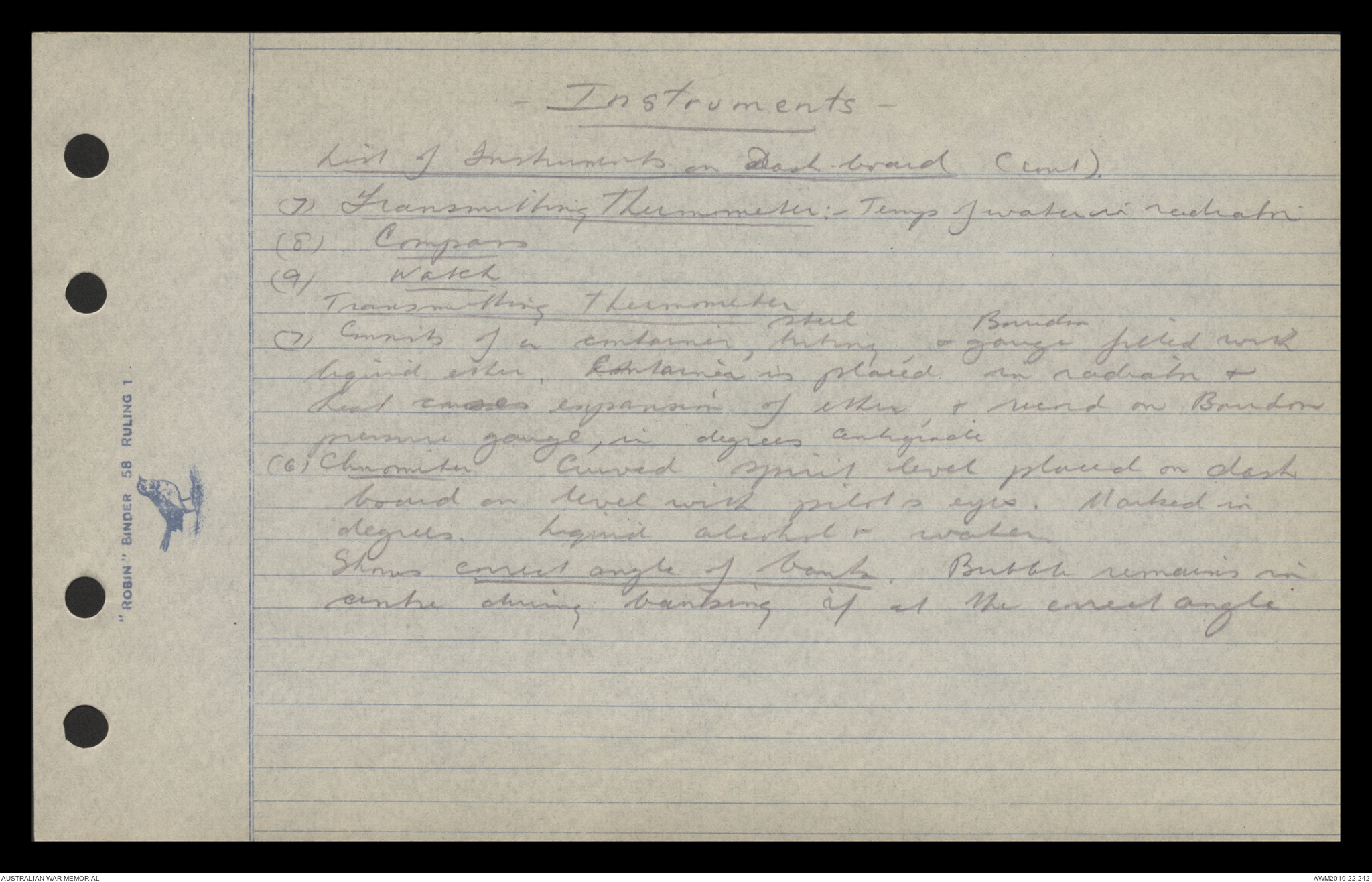
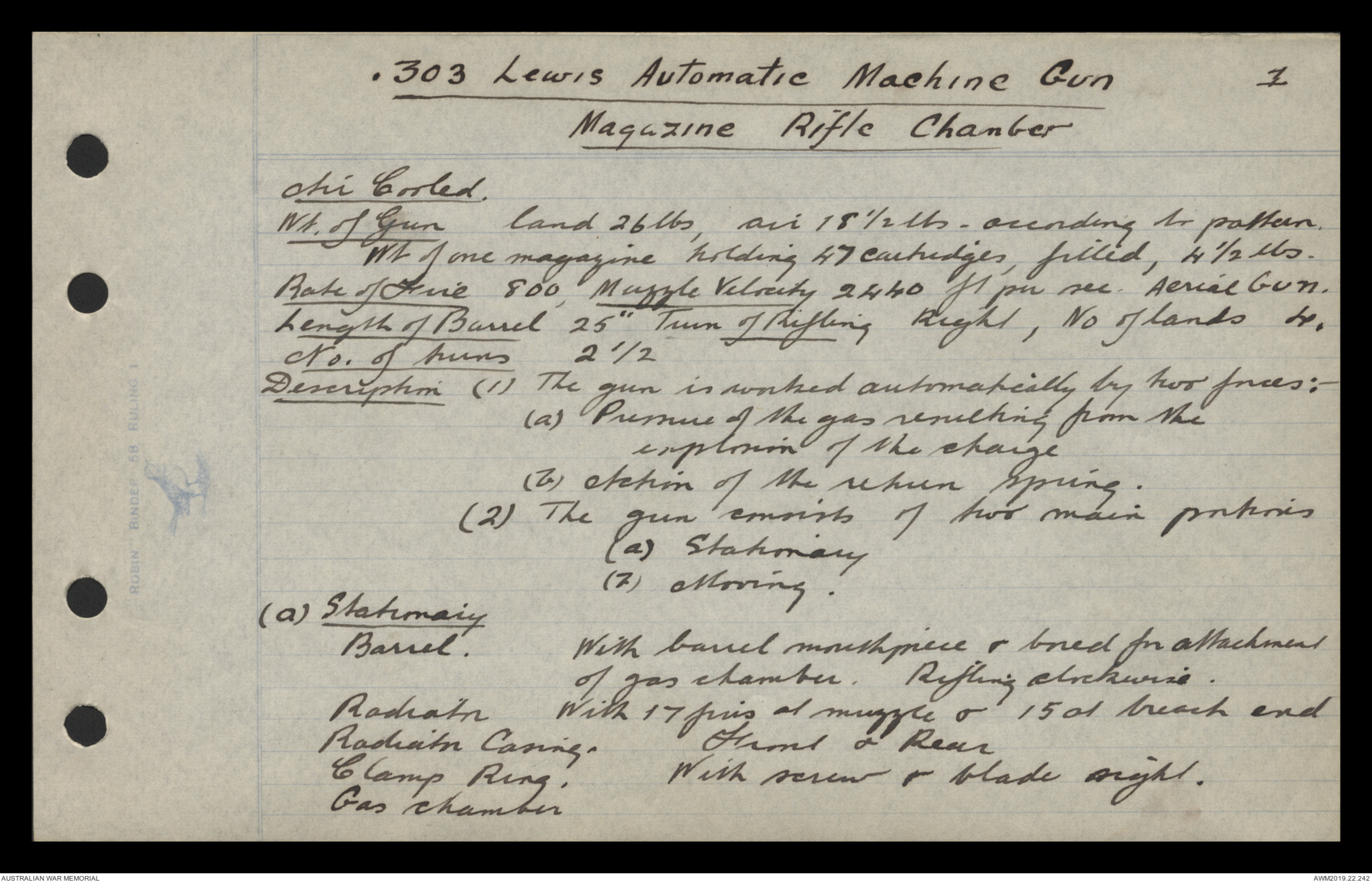
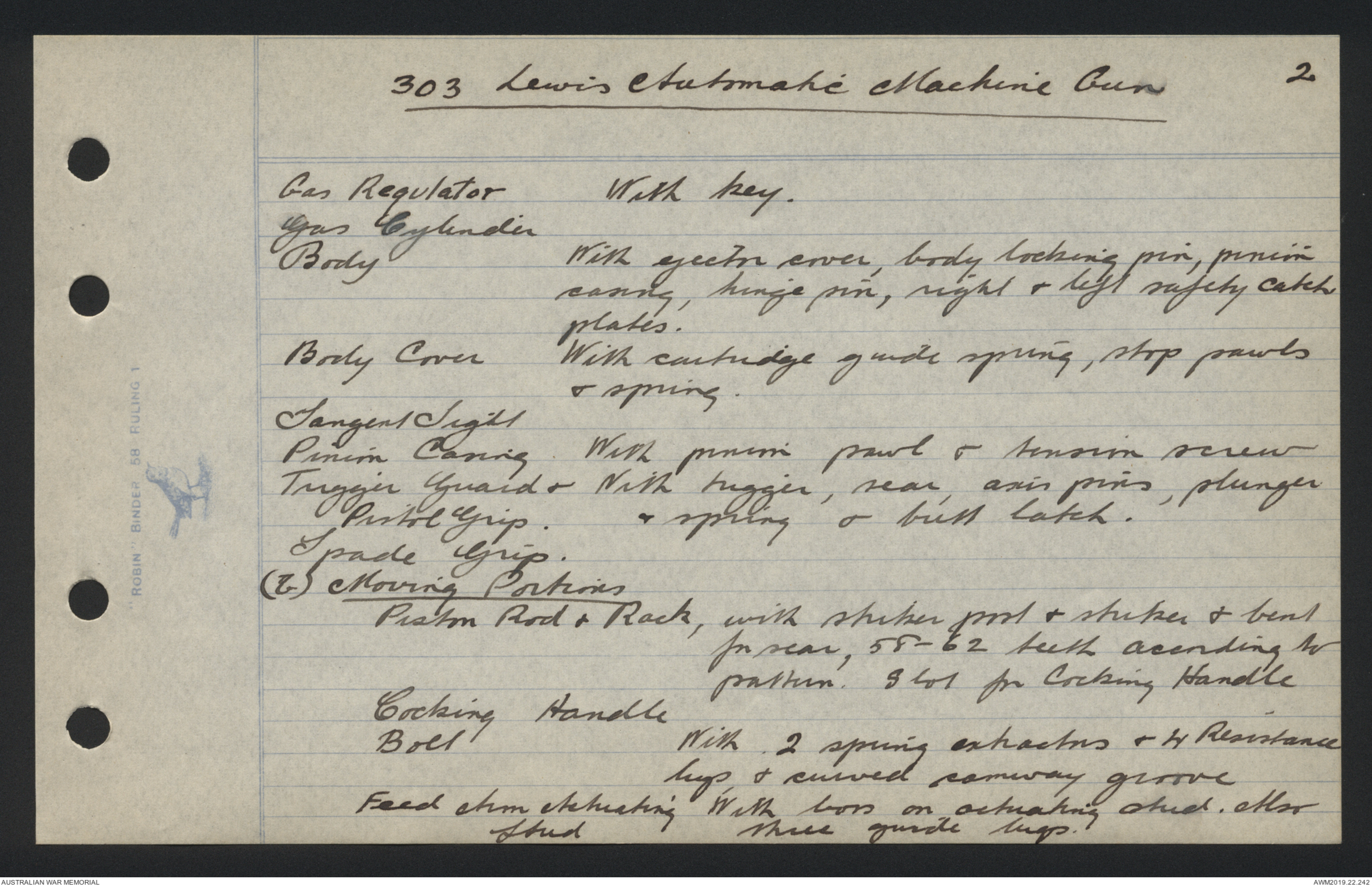
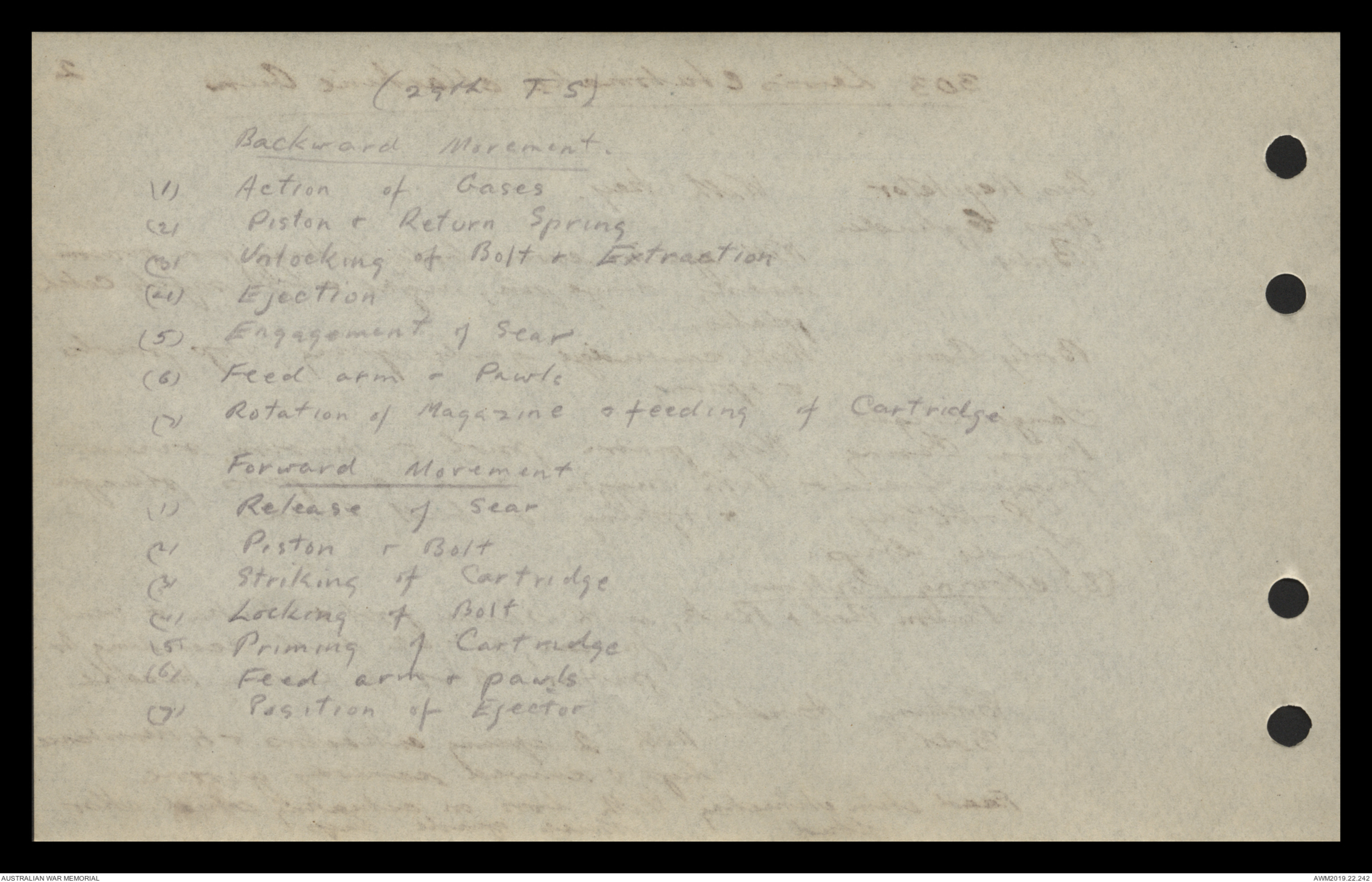
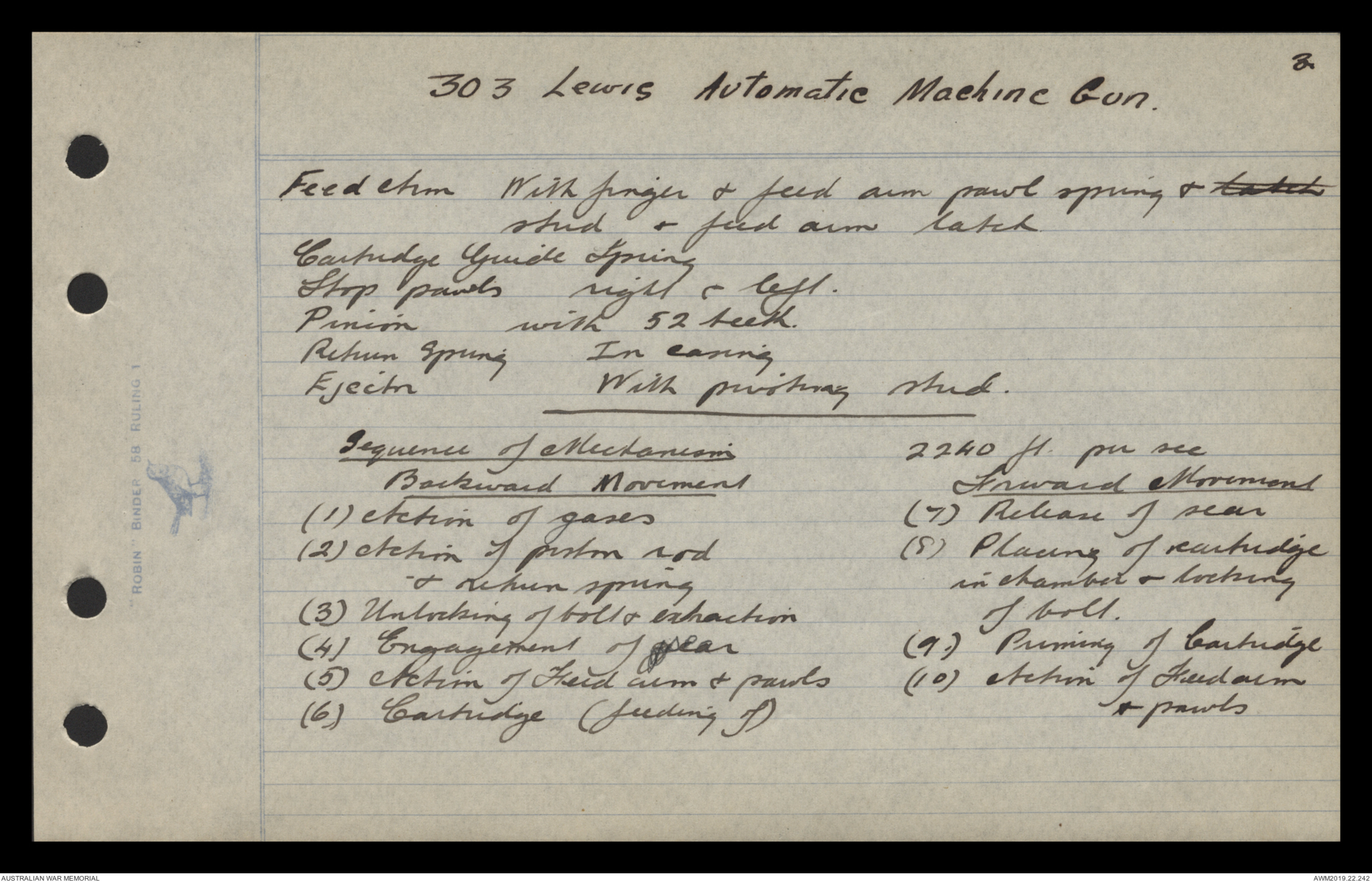
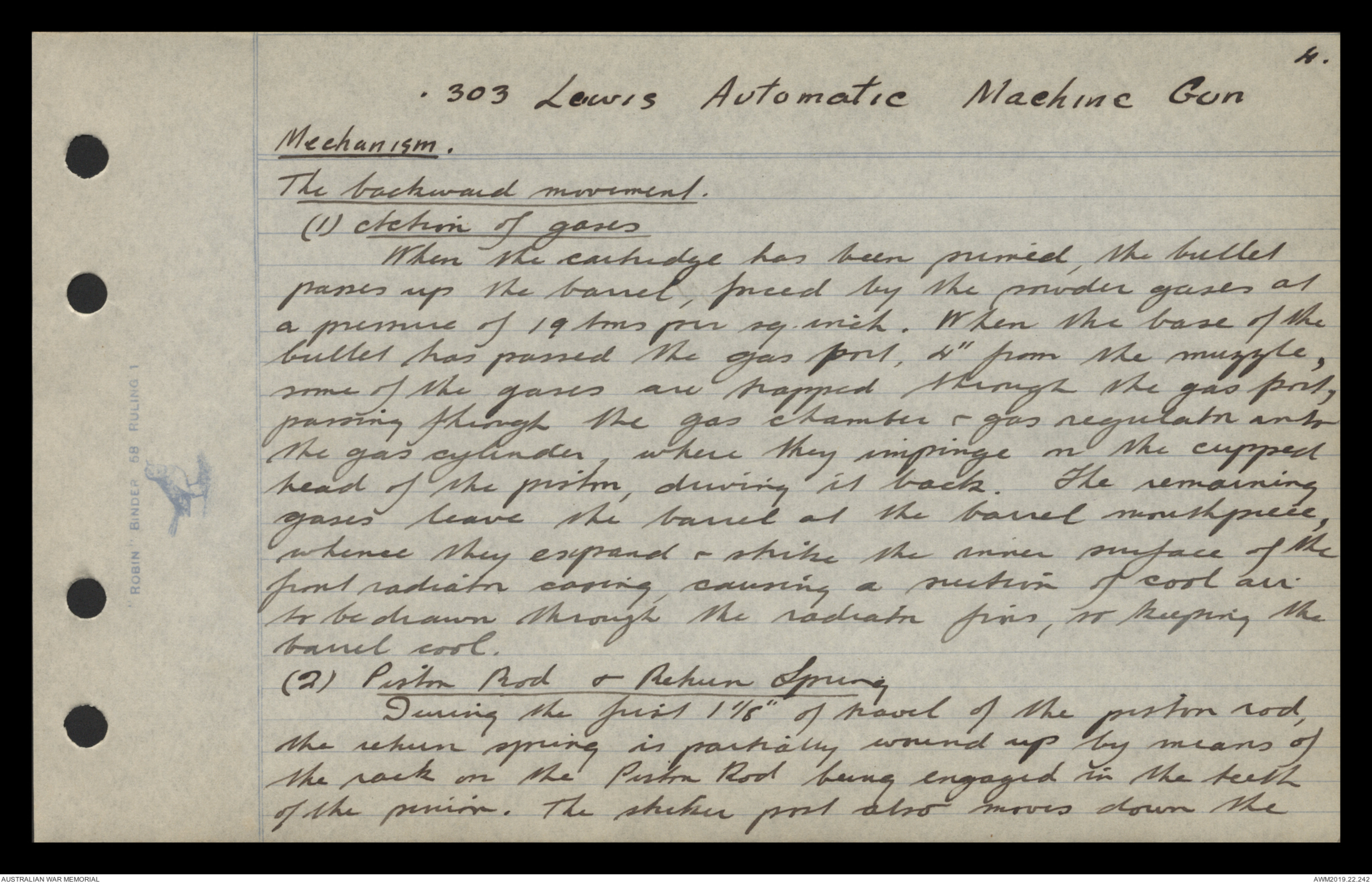
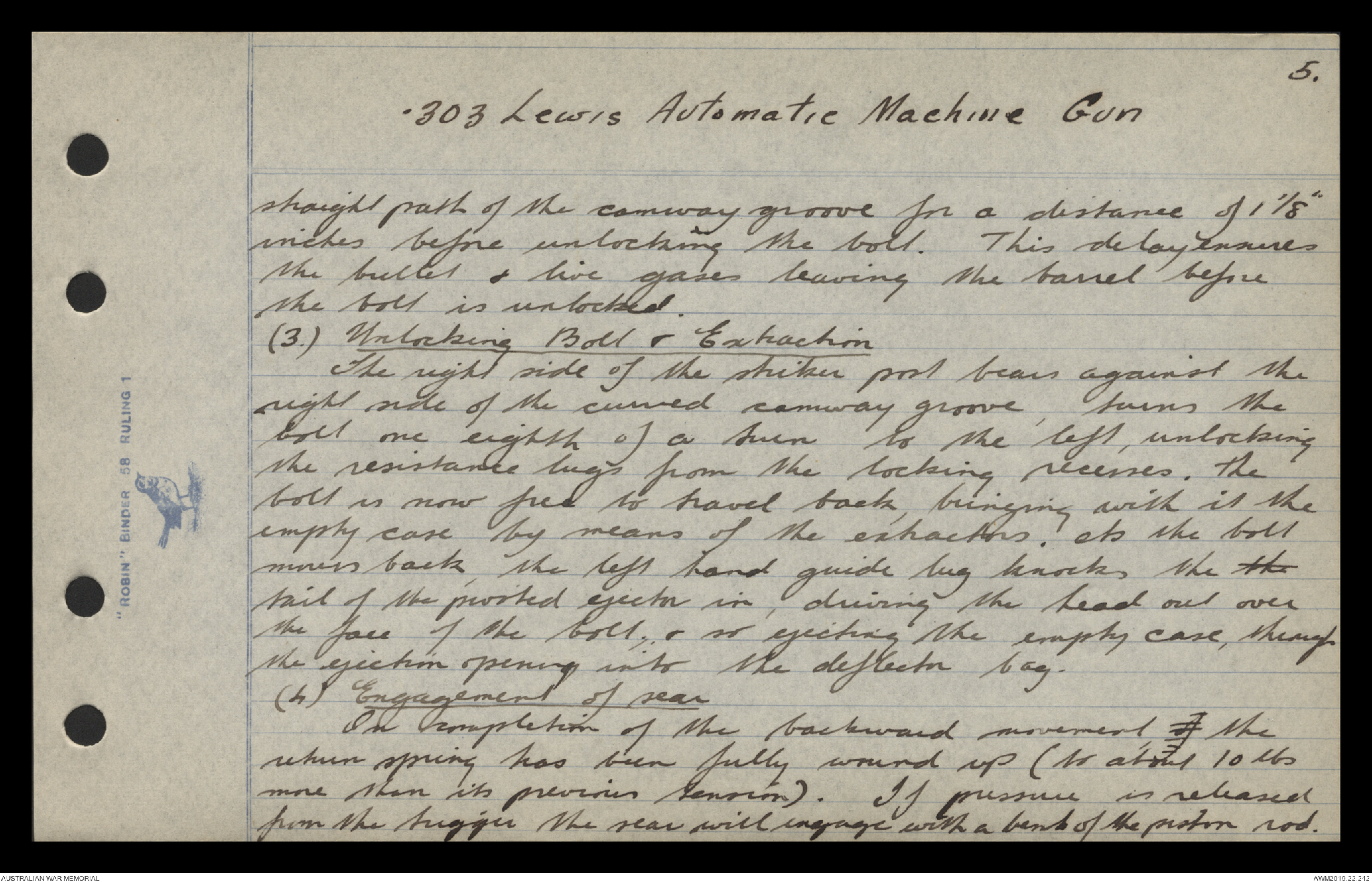
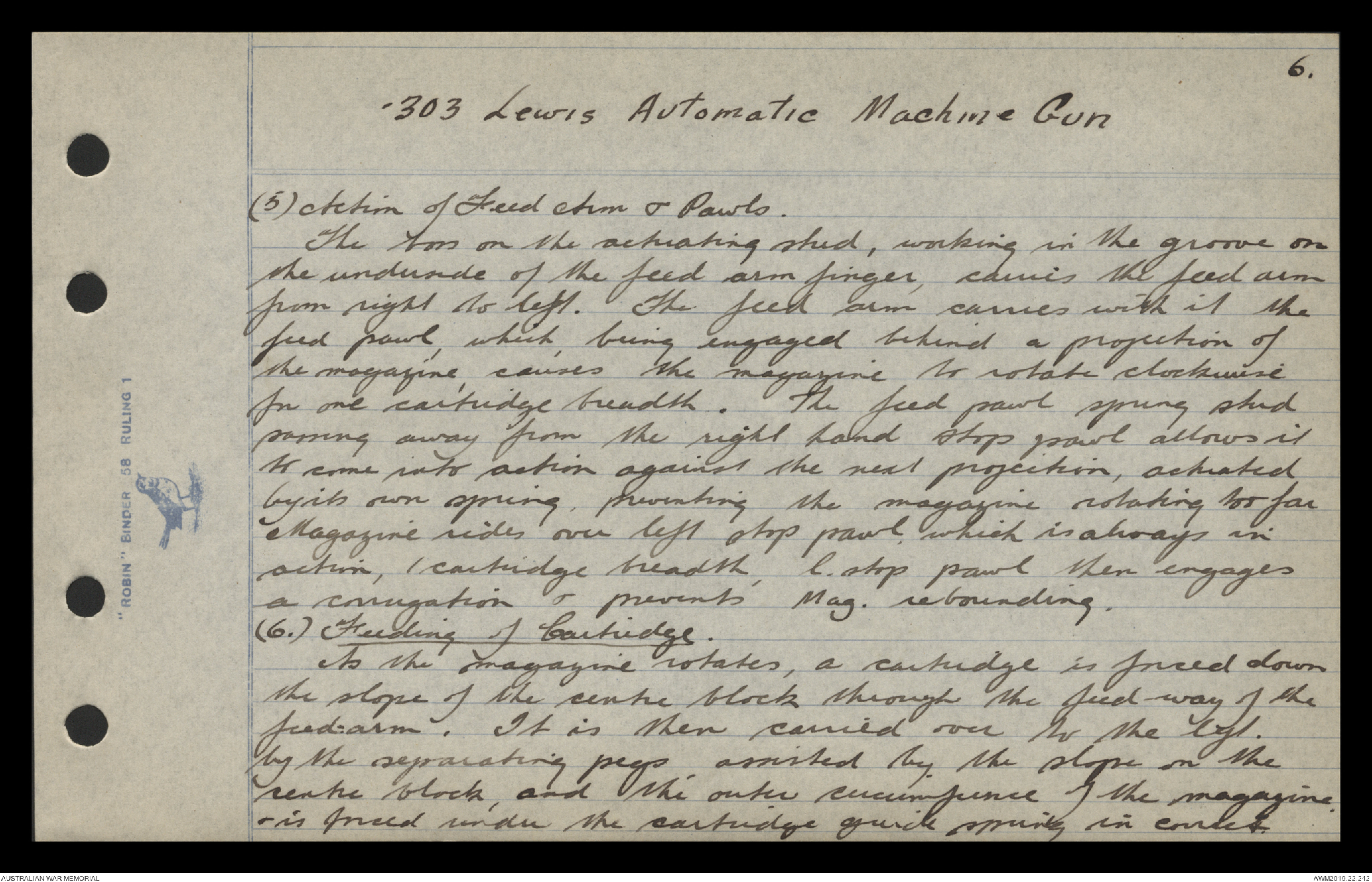
diagram - see original document
Instruments - Altimeter
This movement of the box is conveyed to a pointer by
means of a delicate & magnifying system of levers,
the movement being converted to a rotary motion
by means of a fine silver chain passing round a
pulley on the pointer spindle. The hair spring tends
to keep the chain taunt. As the pressure varies on
the ground, the zero position of the pointer is
not constant; to allow for this a thumb screw
is provided by means of which the dial may be
rotated until the zero mark coincides with
the position of the pointer. The instrument is compensated
for errors caused by changes in temperature; the dial
is graduated in thousands of feet.
List of Instruments carried on Dashboard
Rev Indicator (r.p.m. of engine
Air Speed Indicator Speed of machine through air in m.p.h.
Altimeter Height in 1000s of feet
Pressure Gauge Air pressure in petrol tank
Petrol Gauge Amount of petrol in tank
Clinometer Lateral Stability
Instruments -
List of Instruments on Dash board (cont)
(7) Transmitting Thermometer:- Temp of water in radiator
(8) Compass
(9) Watch
Transmitting Thermometer
(7) Consists of a container,steel tubing, & Bourdon gauge filled with
liquid ether.Container is placed in radiator &
heat causes expansion of ether,& record on Bourdon
pressure gauge, in degrees.
(6) Clinomiter Curved spirit level placed on dash
board on level with pilot's eyes. Marked in
degrees. Liquid alcohol & water.
Shows correct angle of bank. Bubble remains in
centre during banking if at the correct angle
1
.303 Lewis Automatic Machine Gun
Magazine Rifle Chamber
Air Cooled
Wt. of Gun land 26 lbs, air 18½ lbs. according to pattern.
Wt. of one magazine holding 47 cartridges, filled, 4½ lbs.
Rate of Fire 800, Muzzle velocity 2440 ft per sec. Aerial Gun.
Length of Barrel 25" Turn of Rifling Right, No of lands 4,
No. of turns 2 1/2
Description (1) the gun is worked automatically by two forces :-
(a) Pressure of the gas resulting from the
explosion of the charge
(b) action of the return spring.
(2) The gun consists of two main portions
(a) Stationary
(b) Moving.
(a) Stationary
Barrel. With barrel mouthpiece & bored for attachment
of gas chamber. Rifling clockwise.
Radiator With 17 fins at muzzle & 15 at breach end
Radiatn Casing Front & Rear
Clamp Ring. With screw & blade sight.
Gas chamber
2
303 Lewis Automatic Machine Gun
Gas regulator With key.
Gas Cylinder
Body With ejector cover, body locking pin, pinion
casing, hinge pin, right & left safety catch
plates.
Body Cover With cartridge guide spring, stop pawls
& spring.
Tangent Sight
Pinion Casing With pinion pawl & tension screw
Trigger Guard & Nith tuggir, rear, axis pins, plunger
Pistol Grip & spring or butt latch.
Spade Grip.
(b) Moving Portions
Piston Road & Rack, with striker post & striker & bent
for rear, 58-62 teeth according to
pattern. Slot for Cocking Handle
Cocking Handle
Bolt With 2 spring extractors & 4 Resistance
lugs & curved camway groove
Feed Arm Actuating With boss on actuating stud. Also
Stud three guide lugs.
(29th T.S.)
Backward Movement
(1) Action of Gases
(2) Piston & Return Spring
(3) Unlocking of Bolt & Extraction
(4) Ejection
(5) Engagement of Gear
(6) Feed arm & Pawle
(7) Rotation of Magazine & feeding of Cartridge
Forward Movement
(1) Release of Gear
(2) Piston & Bolt
(3) Striking of Cartridge
(4) Locking of Bolt
(5) Priming of Cartridge
(6) Feed arm & pawls
(7) Position of Ejector
3.
303 Lewis Automatic Machine Gun.
Feed Arm With finger & feed arm pawl spring & latch
stud & feed arm latch
Cartridge Guide Spring
Stop pawls right & left
Pinion with 52 teeth.
Return Spring In casing
Ejector with pivoting stud.
Sequence of Mechanism 2240ft. per sec
Backward Movement Forward Movement
(1) Action of gases (7) Release of rear
(2) Action of piston rod (8) Placing of cartridge
& return spring in chamber & locking
(3) Unlocking of bolt & extraction of bolt.
(4) Engagement of gear (9) Priming of Cartridge
(5) Action of Feed arm & pawls (10) Action of Feed arm
(6) Cartridge (feeding of) & pawls
4.
.303 Lewis Automatic Machine Gun
Mechanism.
The backward movement
(1) Action of gases
When the cartridge has been primed, the bullet
passes up the barrel, forced by the powder gases at
a pressure of 19 tons per sq. inch. When the base of the
bullet has passed the gas port, 4" from the muzzle,
some of the gases are trapped through the gas port.
passing through the gas chamber & gas regulator into
the gas cylinder, where they impinge on the cupped
head of the piston, driving it back. The remaining
gases leave the barrel at the barrel mouthpiece,
whence they expand & strike the inner surface of the
front radiator casing, causing a section of cool air
to be drawn through the radiator pins, so keeping the
barrel cool.
(2) Piston Rod & Return Spring
During the first 1 1/8" of travel of the piston rod,
the return spring is partially wound up by means of
the rack on the Piston Rod being engaged in the teeth
of the pinion. The striker post also moves down the
5.
.303 Lewis Automatic Machine Gun
straight of the camway groove for a distance of 1 1/8"
inches before unlocking the bolt. This delay ensures
the bullet & live gases leaving the barrel before
the bolt is unlocked.
(3.) Unlocking bolt & Extraction
The right side of the striker post bears against the
right side of the curved camway groove, turns the
bolt one eighth of a turn to the left, unlocking
the resistance lugs from the locking recesses. The
bolt is now free to travel back, bringing with it the
empty case by means of the extractors. As the bolt
moves back, the left hand guide lug knocks the the
tail of the pivoted ejector in, driving the head out over
the face of the bolt, & so ejecting the empty case, through
the ejection opening into the deflector bag.
(4) Engagement of sear
On completion of the backward movement of the
return spring has been fully wound up (at about 10lbs
more than its previous tension). If pressure is released
from the trigger the sear will engage with a bend of the piston rod.
6.
.303 Lewis Automatic Machine Gun
(5) Action of Feed Arm & Pawls
The boss on the actuating stud, working in the groove on
the underside of the feed arm finger, carries the feed arm
from right to left. The feed arm carries with it the
feed pawl, which, being engaged behind a projection of
the magazine, causes the magazine to rotate clockwise
for one cartridge breadth. The feed pawl spring stud
passing away from the right hand stop pawl allows it
to come into cation against the next projection, actuated
by its own spring, preventing the magazine rotating too far
Magazine rides over left stop pawl, which is always in
action, 1 cartridge breadth, l. stop pawl then engages
a corrugation & prevents Mag. rebounding.
(6.) Feeding of Cartridges.
As the magazine rotates, a cartridge is forced down
the slope of the centre block through the feed-way of the
feed-arm. It is then carried over the left
by the separating pegs, assisted by the slope on the
centre block, and the outer circumference of the magazine
& is forced under the cartridge guide spring in correct.
 Sam scott
This transcription item is now locked to you for editing. To release the lock either Save your changes or Cancel.
This lock will be automatically released after 60 minutes of inactivity.